Contract Lawyers Los Angeles | Drafting & Review
If you are searching for contract lawyers in Los Angeles, you are likely evaluating how a business agreement should be structured to protect your interests while supporting a stable commercial relationship.
Contracts form the legal foundation of nearly every business interaction. Whether a company is entering a partnership, negotiating with vendors, engaging service providers, or formalizing a commercial transaction, the terms written into an agreement determine how responsibilities are shared, how risks are allocated, and how disputes will be resolved if challenges arise.
Many companies sign agreements that appear straightforward at first glance, only to discover later that important protections were missing or that key obligations were unclear. Ambiguous language, incomplete provisions, or poorly defined responsibilities can create legal exposure that affects both the stability of the business relationship and the financial health of the company.
In case you are new here, we are Madero & Carriles Legal Group, a bilingual and bicultural law firm advising entrepreneurs, executives, and business owners in Los Angeles whose commercial activities often extend across the United States and Mexico. Many of the matters we handle involve business relationships, transactions, and agreements that operate across jurisdictions, where careful contract drafting becomes essential to avoid misunderstandings and protect the parties involved. This perspective allows us to guide clients through the legal structure of business agreements with both practical and cross-border considerations in mind.
Contracts are not simply administrative documents. They are legal frameworks that define how business relationships operate over time. On this page, we explain how contract drafting, review, and negotiation function in commercial transactions, the risks businesses commonly encounter when agreements are not carefully structured, and how thoughtful legal guidance can help companies operate with greater clarity and protection.
Contract drafting refers to the process of preparing legally binding agreements that define the rights, responsibilities, and expectations of the parties involved in a business relationship. A well drafted contract establishes clear terms that guide how the relationship will operate over time.
Contract review involves carefully analyzing existing agreements before they are signed. This process helps identify unclear provisions, legal risks, or obligations that may affect a company’s interests. Reviewing an agreement before execution allows businesses to understand the practical and legal implications of the contract.
Contract negotiation focuses on adjusting and structuring contractual terms so that the final agreement reflects balanced responsibilities and protects the parties involved. Negotiation may involve revising liability provisions, payment structures, termination rights, or dispute resolution mechanisms.
Together, drafting, review, and negotiation help businesses create agreements that provide legal clarity and support stable commercial relationships.
When transactions involve international partners or cross-border operations, contract structuring may also require coordination across legal systems. Agreements that involve parties or operations in both the United States and Mexico often benefit from careful legal planning so that contractual terms function effectively within each jurisdiction.
Businesses often seek legal guidance when entering agreements that will affect important commercial relationships or financial commitments. Contracts that govern partnerships, service arrangements, vendor relationships, or strategic transactions can have long term operational and financial consequences.
Legal review may also be valuable when a company is asked to sign a contract prepared by another party. In these situations, understanding the obligations and risks contained in the agreement helps businesses avoid unintended liabilities or unfavorable terms.
Companies negotiating complex commercial relationships frequently benefit from legal support during the negotiation process. Careful negotiation helps ensure that contractual responsibilities remain balanced and that the agreement reflects the practical realities of the business relationship.
Businesses operating in international environments may require additional contractual planning. Agreements involving partners, vendors, or operations connected to both the United States and Mexico often benefit from legal guidance that considers how contractual provisions interact with different legal systems.
Our approach to contract drafting and review begins with understanding the business relationship behind the agreement. Contracts should reflect the actual expectations and responsibilities of the parties involved rather than relying on generic language copied from standard templates.
We work with clients to evaluate the commercial objectives of the agreement and identify the legal risks that may arise during the life of the contract. This often involves reviewing liability provisions, termination clauses, dispute resolution mechanisms, payment structures, and the allocation of responsibilities between the parties.
Where negotiation is necessary, we assist clients in adjusting contractual terms so that obligations remain balanced and enforceable. Thoughtful negotiation can prevent misunderstandings and reduce the likelihood of disputes later in the relationship.
Many of the companies we advise operate in international environments where transactions may involve partners or operations in more than one jurisdiction. Our cross-border experience allows us to assist clients in structuring agreements that function effectively when commercial relationships involve both the United States and Mexico.
Our goal is not simply to prepare contracts. It is to help clients build agreements that support stable business relationships and long term operational clarity.
Contract drafting and negotiation play a central role in shaping how business relationships operate. Agreements establish the legal framework that defines expectations, allocates risk, and guides how parties interact over time.
As contract lawyers advising companies in Los Angeles, California, we assist businesses in preparing agreements that are clear, enforceable, and aligned with the practical realities of the commercial relationship.
Many of the organizations we advise operate across borders or maintain relationships with international partners. In those situations, contract planning may also involve evaluating how agreements function within different legal systems, particularly when transactions involve companies or operations connected to both the United States and Mexico.
Tips & resources for business contracts
Contracts are most effective when they clearly reflect the expectations and responsibilities of the parties involved. Businesses benefit from ensuring that agreements define obligations in precise terms rather than relying on vague or overly general language.
Careful review of agreements before signing is another important step. Understanding the allocation of liability, the scope of obligations, and the procedures for resolving disputes can help businesses avoid misunderstandings later in the relationship.
Maintaining organized records of executed contracts and amendments also supports operational clarity. Well documented agreements allow companies to track obligations, enforce contractual rights, and respond efficiently if questions arise during the course of the business relationship.
Companies engaged in international transactions should also consider how contractual terms interact with legal systems in other jurisdictions. Cross-border agreements may require additional planning to ensure that contractual provisions remain enforceable and commercially practical.
Your trusted law firm in Los Angeles, California
Contract attorneys supporting entrepreneurs and companies in Los Angeles.
At Madero & Carriles Legal Group, we advise entrepreneurs, business owners, and companies who want their commercial relationships to be supported by clear and enforceable agreements.
Many of the businesses we represent operate in complex environments where transactions involve multiple jurisdictions, international partners, or evolving corporate structures. In these situations, carefully structured contracts become essential tools for protecting business interests and maintaining operational clarity.
Our cross-border experience allows us to assist clients whose transactions involve both the United States and Mexico. Contracts governing international commercial relationships often require thoughtful legal structuring so that the agreement operates effectively within each jurisdiction.
Our role is to help clients approach contracts not as routine paperwork, but as strategic legal instruments that support stable and productive business relationships.
We provide bilingual immigration, estate planning, and business law services in Los Angeles, across the U.S. and Mexico.
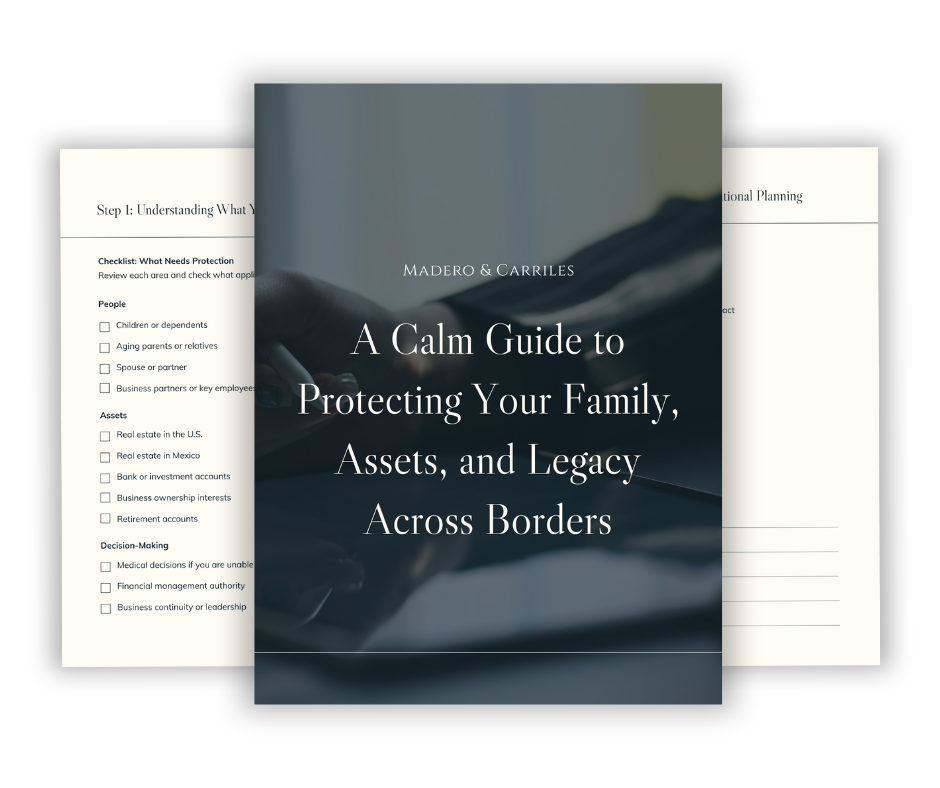
Book a free consultation for your legal matters
Let’s build a legal strategy that supports what matters today and for generations to come.
FAQ
A well structured business contract generally identifies the parties involved, clearly defines the services or obligations being exchanged, establishes payment terms and timelines, and addresses liability allocation and dispute resolution procedures.
A legally enforceable contract typically requires mutual agreement between the parties, lawful terms, and consideration exchanged between them. The agreement must also clearly describe the obligations each party is expected to fulfill.
Legal review is advisable before signing agreements that involve significant financial commitments, long term obligations, or complex business relationships. Reviewing a contract early allows businesses to identify risks and negotiate terms when necessary.
Common drafting issues include unclear language, incomplete provisions, poorly defined responsibilities, and contracts that fail to address liability or termination rights. These issues can lead to disputes or operational complications later.
Businesses can reduce risk by ensuring that contracts clearly define obligations, allocate liability appropriately, include termination rights, and establish procedures for resolving disputes if conflicts arise.