Dual Citizenship Lawyers | U.S. & Mexico | Los Angeles
If you are researching dual citizenship or binational immigration coordination, your situation likely involves more than a single immigration application. You may have personal, professional, or family ties in both the United States and another country and want to understand how citizenship, residency, and immigration rules interact across borders.
For many individuals and families, living between two countries creates opportunities but also legal questions. Dual nationality can affect travel, employment, taxation considerations, inheritance planning, and immigration status for family members.
In case you are new here, we are Madero & Carriles, a bilingual and bicultural law firm advising individuals, families, and entrepreneurs in Los Angeles and beyond whose lives connect the United States and Mexico.
On this page we explain how binational immigration coordination works, how dual citizenship may affect legal status and family planning, and how thoughtful legal guidance can help individuals navigate the legal considerations of maintaining ties to more than one country.
What is binational immigration coordination?
Binational immigration coordination refers to the legal planning required when individuals maintain citizenship, residency, or legal rights in more than one country.
Unlike traditional immigration matters that focus on entering or remaining in a single country, binational coordination evaluates how legal status in one country interacts with rights, obligations, and opportunities in another.
For many cross border families between the United States and Mexico, dual nationality may arise through several legal pathways. Individuals born in the United States may also qualify for Mexican nationality through their parents, while spouses of Mexican nationals may become eligible for Mexican citizenship after meeting residency and legal requirements under Mexican law.
In addition, historical citizenship situations sometimes arise in cross border families. Some individuals who relocated to Mexico decades ago were informed that obtaining Mexican nationality required renouncing U.S. citizenship. In practice, a valid renunciation of U.S. citizenship requires formal legal procedures before U.S. authorities. Part of binational immigration coordination may involve reviewing whether a formal renunciation actually occurred and whether U.S. citizenship may still exist or potentially be reclaimed depending on the circumstances.
Understanding how these legal systems interact helps individuals and families make informed decisions that protect their mobility, professional opportunities, and family stability across borders.
Most common challenges in binational immigration situations
Individuals navigating dual citizenship or cross border legal status often face uncertainty about how nationality laws interact between countries. Each country maintains its own legal framework regarding citizenship rights, immigration eligibility, and residency obligations.
Coordinating immigration status across jurisdictions can also be challenging. Immigration benefits or residency obligations in one country may influence legal status in another.
Families whose members hold different citizenships frequently need coordinated immigration planning. Spouses, children, and extended family members may have different citizenship rights or immigration eligibility depending on their circumstances.
Mobility between countries can also raise legal considerations. Travel patterns, employment opportunities, and residency requirements may all influence immigration status and long term planning.
How do I know if I need binational immigration coordination?
Individuals often seek legal guidance when they hold or may qualify for citizenship in more than one country. Dual nationality can create opportunities, but it can also involve legal responsibilities that require thoughtful planning.
Binational families frequently require coordinated immigration strategies when family members hold different citizenship or immigration status.
Frequent travel or professional activity between countries may also require immigration planning to ensure that residency obligations and immigration compliance are maintained.
Some individuals seek guidance when planning long term mobility between countries, including family relocation, international business activity, or cross border retirement planning.
How we approach binational immigration coordination in Los Angeles
Every matter begins by understanding the client’s citizenship status, immigration history, and family circumstances across jurisdictions.
We analyze how nationality laws, immigration regulations, and residency requirements interact between the United States and Mexico. This may include evaluating whether individuals qualify for Mexican nationality through family lineage, whether spouses may pursue Mexican citizenship, and whether dual nationality may support the client’s long term personal or professional plans.
Our analysis may also include reviewing historical citizenship situations involving the United States and Mexico. Some individuals who moved to Mexico decades ago believed they were required to renounce U.S. citizenship when obtaining Mexican nationality. We help determine whether the formal legal requirements for renunciation were actually completed and whether U.S. citizenship may still exist or potentially be reasserted.
In addition, we assist U.S. citizens who are considering retiring, relocating temporarily, or establishing business activities in Mexico. These situations often involve evaluating Mexican immigration pathways and residency options so individuals can lawfully live, work, invest, or retire in Mexico while maintaining ties to the United States.
Our goal is not simply to answer a citizenship question but to provide a coordinated cross border legal strategy that helps clients navigate life between the United States and Mexico with clarity.
What topics can we address within binational immigration coordination & dual citizenship?
Dual citizenship and binational immigration planning often require evaluating legal rights and obligations in more than one country. As dual citizenship lawyers in Los Angeles, we assist individuals and families with a wide range of matters related to nationality law and cross border immigration strategy.
Determining whether an individual qualifies for citizenship in more than one country often requires analyzing nationality laws, family lineage, place of birth, and immigration history. Individuals born in the United States may qualify for Mexican nationality through their parents, while spouses of Mexican nationals may pursue Mexican citizenship depending on residency and legal requirements.
We also assist individuals in reviewing historical citizenship situations involving the United States and Mexico. Some U.S. citizens who relocated to Mexico years ago believed they were required to renounce U.S. citizenship in order to obtain Mexican nationality. We help evaluate whether the legal requirements for renunciation were actually completed and whether U.S. citizenship may still exist or potentially be reclaimed depending on the circumstances.
For binational families, we assist in coordinating immigration options for spouses, children, and relatives while considering how citizenship status in one country may affect immigration opportunities in another.
In addition, we assist U.S. citizens who are considering retiring, relocating temporarily, or conducting business in Mexico. These situations often involve evaluating Mexican immigration pathways, residency permits, and long term legal strategies that support cross border mobility.
Because citizenship decisions often influence travel flexibility, professional opportunities, and family planning, we help clients evaluate long term strategies that align citizenship rights, immigration pathways, and cross border life planning with their personal and professional objectives.
Tips & resources for dual citizenship and binational planning
Individuals exploring dual citizenship often benefit from understanding nationality laws in both countries. Each jurisdiction has its own legal framework regarding citizenship rights and dual nationality.
Careful immigration planning is also important because citizenship decisions may influence future residency options or immigration eligibility.
Families should also consider how citizenship laws may affect spouses and children, since eligibility may vary depending on the citizenship status of each family member.
Many cross border matters benefit from coordinated legal guidance that considers the legal systems of both countries and the long term implications of citizenship decisions.
Your trusted law firm in Los Angeles, California
Immigration coordination for cross border clients
At Madero & Carriles, we focus on advising individuals, families, and entrepreneurs whose lives operate between the United States and Mexico.
Our firm understands the realities of cross border families, international professionals, and binational entrepreneurs. This perspective allows us to help clients evaluate immigration and citizenship decisions through a broader strategic lens rather than focusing only on isolated legal questions.
When you work with our firm, you receive consistent access to trusted legal counsel and guidance designed to help you navigate cross border legal matters with confidence.

We provide bilingual cross-border estate planning & probate, immigration, and business law services across the U.S. and Mexico. We are in Los Angeles, California, as well as in Mexico City and Guadalajara.
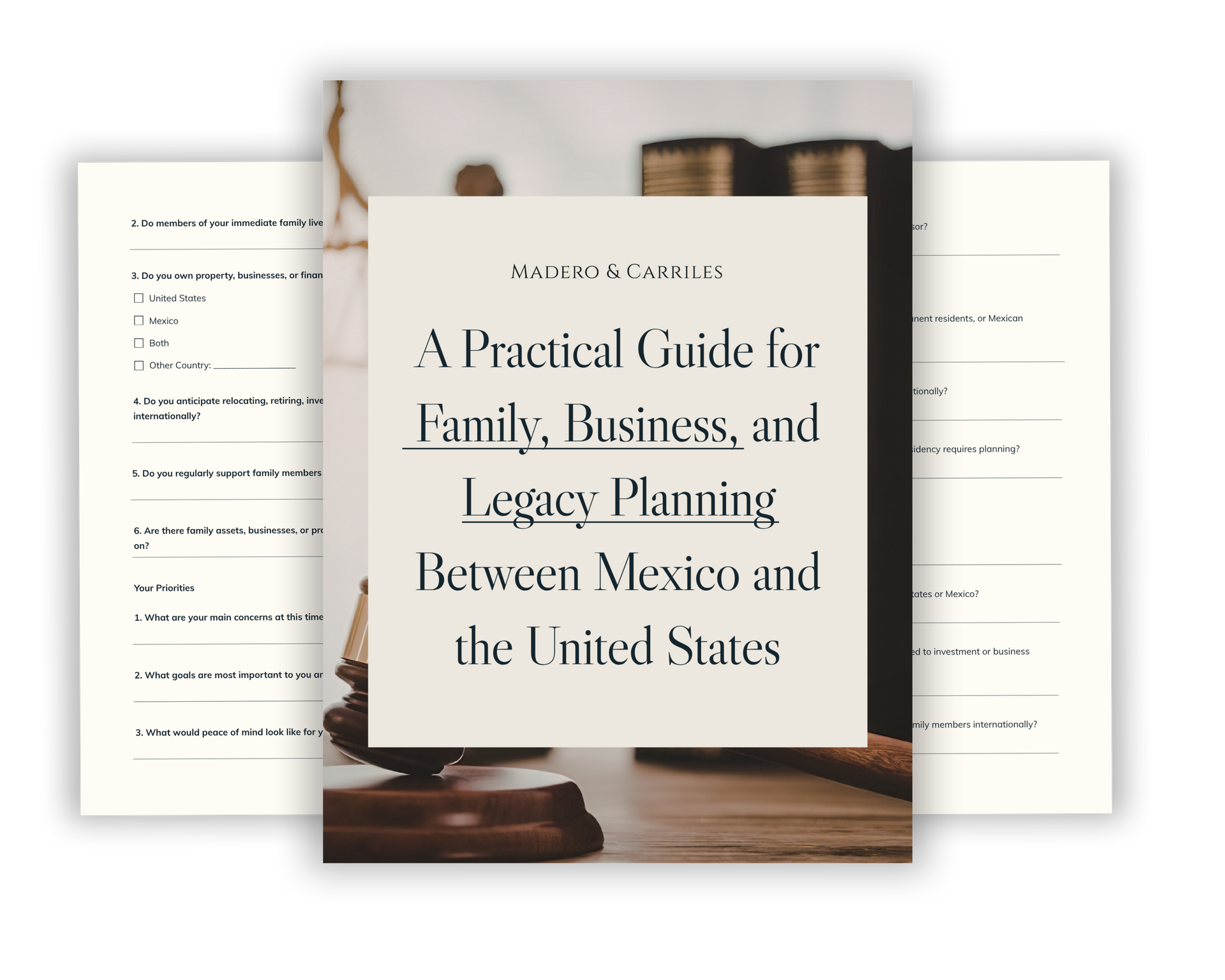
Book a free consultation for your legal matters
Let’s build a legal strategy that supports what matters today and for generations to come.







FAQ
What are the benefits of dual citizenship?
Dual citizenship may allow individuals to live, work, and travel more freely between two countries. It may also provide access to additional economic, educational, and professional opportunities depending on the laws of each country.
Does the United States allow dual citizenship?
Yes. The United States does not prohibit dual citizenship. This means an individual may hold U.S. citizenship while also maintaining citizenship in another country, provided the other country’s laws also allow dual nationality.
Can dual citizens work in both countries?
In many situations, dual citizens may work in either country of citizenship without requiring additional immigration authorization. However, employment laws and professional regulations may still apply depending on the type of work performed.
Do dual citizens pay taxes in both countries?
Tax obligations depend on the laws of each country and individual circumstances. Dual citizens may have tax reporting responsibilities in more than one jurisdiction, which is why coordinated legal and tax guidance can be important.
Can children inherit dual citizenship?
In many cases, children may acquire citizenship from one or both parents depending on the nationality laws of the countries involved. Eligibility often depends on where the child is born and the citizenship status of the parents.