Estate Administration Lawyers Los Angeles | Madero & Carriles
If you are looking for experienced estate administration lawyers in Los Angeles, California, you may be navigating one of the most emotionally and legally complex moments a family can face. Estate administration is not simply a legal procedure. It is a process that involves honoring a person’s legacy, protecting beneficiaries, and ensuring that assets are transferred in accordance with the law and the wishes of the person who has passed.
In case you are new here, we are Madero & Carriles, a bilingual and bicultural law firm advising individuals and families in Los Angeles whose personal, financial, and family matters often extend across the United States and Mexico. Many of the estate matters we handle involve assets, property, or family members located in more than one country, requiring thoughtful coordination between legal systems and careful planning to ensure that a loved one’s affairs are properly administered.
When estates include cross-border elements between the United States and Mexico, the legal process often requires thoughtful coordination across jurisdictions. On this page, we explain what estate administration involves, the challenges families commonly encounter, and how careful legal guidance can provide structure, clarity, and reassurance during a difficult time.
What is estate administration?
Estate administration is the legal process of managing and distributing a person’s assets after death. This process may include validating a will if one exists, identifying and valuing assets, settling debts and taxes, and distributing property to beneficiaries in accordance with the law or the decedent’s estate plan.
In Los Angeles, California, estate administration often involves probate court oversight. When assets, beneficiaries, or property are located in both the United States and Mexico, additional coordination between legal systems may be required.
Cross-border estate administration can raise questions such as which jurisdiction has authority over specific assets, how California probate interacts with Mexican inheritance law, whether parallel legal proceedings are necessary, and how to prevent conflicting legal outcomes.
Without coordinated guidance, families may experience delays, unexpected tax implications, or disputes among beneficiaries. A carefully structured estate administration process helps ensure that the decedent’s wishes are honored while protecting the family from unnecessary complications.
Most common challenges in estate administration
Estate administration can present a range of legal and practical challenges, particularly when estates involve multiple assets, jurisdictions, or family members.
In Los Angeles, families often face detailed probate procedures and strict filing requirements. California probate courts impose specific timelines and documentation standards, and missing a filing or deadline can delay the administration process significantly.
When assets are located in both the United States and Mexico, additional complexity may arise. Property ownership, banking structures, and inheritance rules differ between jurisdictions, and coordinating these systems requires careful legal alignment to avoid inconsistent outcomes.
Executors and administrators may also feel uncertain about their fiduciary responsibilities. These roles involve legal duties such as managing estate assets, communicating with beneficiaries, maintaining accurate records, and complying with court procedures. For many individuals, carrying these responsibilities during a period of grief can feel overwhelming.
Family dynamics can also influence estate administration. When estate planning documents are unclear, incomplete, or nonexistent, disagreements among beneficiaries may arise. These situations can create emotional strain as well as legal complications.
Estate administration therefore extends beyond technical legal work. It often carries emotional weight and long-term financial consequences for the entire family.
How do I know if I need estate administration lawyers?
You may benefit from guidance from experienced Estate Administration lawyers in Los Angeles, California if a loved one has recently passed away and owned property in California. Depending on the structure of the assets involved, probate or formal estate administration may be required.
Legal guidance is also particularly important when the estate includes property, business interests, or beneficiaries located in Mexico. Cross-border estates require coordinated legal strategy to ensure that actions taken in one jurisdiction do not unintentionally create complications in another.
Individuals who have been named executor or administrator often seek legal guidance when they feel uncertain about their responsibilities. Fiduciary duties can include managing estate finances, communicating with beneficiaries, maintaining detailed records, and complying with court procedures.
Legal advice may also be helpful when a person passes away without a will. In those situations, California law determines how assets are distributed. When families span multiple countries or complex family structures exist, the administration process can become significantly more complicated.
Even when you are unsure whether formal estate administration is required, early legal guidance can help clarify your options and prevent avoidable mistakes. Complexity does not reflect failure. In many cases, it simply reflects the reality of a life that involved assets, family, and responsibilities across borders.
How we approach estate administration in Los Angeles, California
At Madero & Carriles, our approach to estate administration is grounded in clarity, structure, and long-term client relationships.
We begin by listening carefully. Every estate represents a person’s life, family relationships, and long-term intentions. Before recommending a course of action, we take time to understand the estate’s legal structure, the family dynamics involved, and any cross-border considerations that may affect the administration process.
Our work may include evaluating probate requirements under California law, identifying cross-border asset exposure, coordinating legal implications between the United States and Mexico, and guiding executors or administrators through their fiduciary responsibilities.
Throughout the process, we prioritize clear communication so that clients understand where the estate administration stands, what documentation is required, what potential risks may exist, and what steps will come next.
Our goal is not only to ensure legal compliance, but also to create a process that provides stability, predictability, and reassurance for families during a period that is often emotionally difficult.
What topics can we address within estate administration?
California probate proceedings
Estate administration in Los Angeles often involves formal probate under California law, including court filings, notices to heirs and creditors, asset inventory, and final distribution approvals.
This process can feel overwhelming, especially during a time of grief. Legal guidance helps ensure deadlines are met, documentation is accurate, and fiduciary duties are fulfilled, reducing delays and the risk of personal liability.
When estates include real estate, business interests, or high-value assets, additional legal strategy may be required to ensure efficient administration.
Cross border inheritance coordination
When assets or beneficiaries are located in both the United States and Mexico, estate administration requires coordinated legal strategy across jurisdictions.
This includes determining which jurisdiction governs specific assets, whether parallel proceedings are needed, and how to avoid conflicting outcomes. Differences in inheritance laws, documentation, and property structures can create complexity.
Without proper coordination, families may face delays, duplicative processes, or unintended tax consequences. A unified strategy ensures the estate reflects the full scope of a cross-border life.
Trust administration
When a trust exists, probate may be avoided, but fiduciary responsibilities remain.
Trust administration involves interpreting terms, managing assets, communicating with beneficiaries, and ensuring timely distributions. Legal guidance helps trustees meet their obligations with clarity and confidence while maintaining compliance.
This process supports both proper asset transfer and the long-term intent behind the trust.
Estate tax planning and exposure
Estate administration may include evaluating federal estate tax exposure and cross-border tax implications.
This involves assessing asset values, exemption thresholds, and potential international reporting requirements. Cross-border estates introduce additional factors such as asset classification, jurisdiction, and currency valuation.
Proactive planning helps reduce financial risks and ensures compliance.
Executor and administrator guidance
Executors and administrators carry significant responsibilities, including safeguarding assets, maintaining records, and communicating with beneficiaries.
These roles can feel overwhelming. Legal support provides structure and clarity, helping fiduciaries make informed decisions and fulfill their duties with confidence.
Dispute prevention strategies
Estate matters can strain family relationships, especially when communication is limited or planning is incomplete.
Clear documentation, structured communication, and proactive guidance can reduce misunderstandings and prevent conflict. While not all disputes can be avoided, thoughtful administration lowers the risk of prolonged litigation.
Tips and resources for navigating estate administration
Estate administration becomes more manageable with early organization and clear guidance.
Avoid transferring assets without legal advice, as this can create complications. Organizing financial and property records early simplifies the process. Clear communication with beneficiaries also helps prevent disputes.
For cross-border estates, coordinated legal support is essential to avoid long-term issues and ensure a smooth process.
Your trusted law firm in Los Angeles, California
Probate, trusts & estates law attorneys.
Madero & Carriles advises individuals and families navigating matters involving Probate, Trusts & Estates Law with an emphasis on empathy, clarity, and cross-border coordination.
Our mission is to help clients protect what matters most while navigating complex legal systems in both the United States and Mexico. We understand that cross-border families often face legal realities that do not fit neatly within one jurisdiction, and our approach reflects that complexity rather than asking clients to simplify their circumstances.
When you work with our Estate Administration lawyers in Los Angeles, California, you gain a legal partner focused on providing long-term clarity, consistent communication, and thoughtful planning designed to protect families and assets across generations

We provide bilingual cross-border estate planning & probate, immigration, and business law services across the U.S. and Mexico. We are in Los Angeles, California, as well as in Mexico City and Guadalajara.
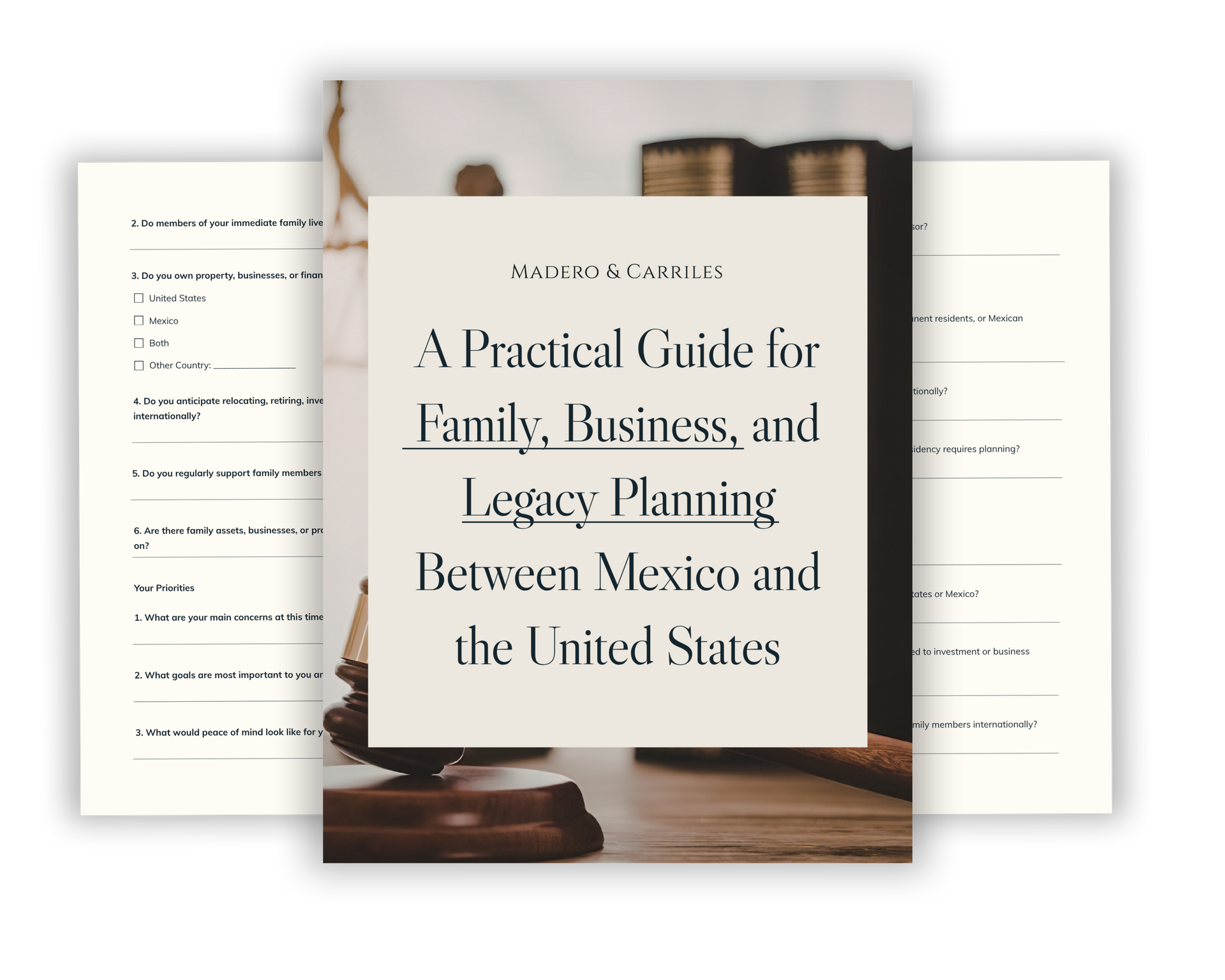
Book a free consultation for your legal matters
Let’s build a legal strategy that supports what matters today and for generations to come.





FAQ
Who does estate planning?
Estate planning is typically handled by an attorney who focuses on wills, trusts, and long-term asset protection strategies. These legal professionals help individuals organize how their assets, responsibilities, and decisions will be managed during incapacity or after death.
For families in Los Angeles whose lives or assets extend into Mexico, estate planning may require coordination across legal systems. California law and Mexican inheritance frameworks can differ significantly, which makes cross-border legal awareness particularly important when designing an effective estate plan.
Estate planning is not limited to high-net-worth individuals. It is a practical step for anyone who wishes to create clarity, reduce uncertainty for loved ones, and protect the long-term stability of their family and assets.
What is an estate planning process?
The estate planning process is a structured legal approach designed to organize how assets, responsibilities, and personal decisions will be handled during life and after death. Rather than focusing solely on documents, the process involves thoughtful planning to ensure that family members, beneficiaries, and fiduciaries understand how the estate should function over time.
This process often begins with identifying and evaluating assets, understanding family and beneficiary structures, and clarifying the client’s long-term objectives. From there, legal documents such as wills, trusts, powers of attorney, and healthcare directives may be prepared to reflect those intentions.
For individuals whose lives involve both the United States and Mexico, the process may also include reviewing how assets are titled in each country and ensuring that legal documents operate effectively across jurisdictions. In this context, estate planning becomes not only a legal exercise but also a strategy for long-term stability and continuity.
How long does estate planning take?
The timeline for estate planning depends largely on the complexity of the individual’s circumstances. In relatively straightforward situations, the process may take several weeks from the initial consultation to finalized documents.
When estates involve property, business interests, or beneficiaries in more than one country, additional time may be required to properly analyze legal and tax considerations. Cross-border planning often requires careful coordination to ensure that documents prepared in one jurisdiction function appropriately in another.
While efficiency is valuable, thorough planning is often more important than speed. A carefully structured estate plan provides long-term clarity and confidence, helping families avoid uncertainty for years to come.
How much does an estate lawyer charge?
Legal fees for estate matters vary depending on the complexity of the estate, the services required, and whether cross-border coordination is involved.
Some attorneys offer flat-fee arrangements for standard estate planning services, while others charge hourly when matters involve probate administration, litigation, or international asset coordination. Estates that include assets in multiple jurisdictions often require additional legal analysis in order to properly align U.S. and Mexican legal systems.
Transparent discussions about legal fees are an important part of the process. Clients should understand the scope of services being provided and how those services contribute to protecting family interests, preserving assets, and ensuring lawful estate administration.
What assets should not be in a trust in California?
Although trusts are powerful estate planning tools, not every asset must be transferred into a trust. Certain assets already have built-in transfer mechanisms that may make trust ownership unnecessary.
For example, retirement accounts such as IRAs or 401(k) plans typically pass directly to designated beneficiaries. Similarly, certain financial accounts and insurance policies may transfer through beneficiary designations without requiring trust ownership.
In cross-border situations, assets located in Mexico may require separate legal analysis and local estate planning. Mexican property and inheritance laws differ from California law, and improper titling can create administrative or tax complications.
A careful legal review ensures that each asset is structured intentionally and strategically rather than automatically placed into a trust without considering the broader estate plan.