Estate Planning attorney Los Angeles | Madero & Carriles
If you are searching for estate planning attorneys in Los Angeles, you are likely thinking about protection, clarity, and long-term stability for the people and assets that matter most to you. You may want to ensure that property transfers efficiently, reduce the likelihood of probate delays, or protect your family from uncertainty and potential disputes in the future.
In case you are new here, we are Madero & Carriles, a bilingual and bicultural law firm advising individuals and families in Los Angeles whose assets, property interests, and family relationships often extend across the United States and Mexico. Many of the estate planning matters we handle involve coordinating assets, beneficiaries, and legal structures that exist in more than one country, allowing us to guide clients through planning decisions that require thoughtful cross-border consideration.
Estate planning is not simply about drafting documents. It is about creating a legally enforceable framework that protects your assets, honors your intentions, and helps prevent unnecessary complications for the people who will one day rely on those decisions.
What is estate planning?
Estate planning is the legal process of organizing how your assets will be managed during your lifetime and distributed after death. A carefully structured estate plan allows individuals to make clear decisions about property ownership, financial authority, and family protection before uncertainty arises.
A comprehensive estate plan may address how property will be distributed, how probate exposure can be reduced, how financial and healthcare decisions will be handled during incapacity, and how trusts may be used to manage and transfer assets. Planning may also consider potential tax exposure, guardianship arrangements for minor children, and the integration of business succession considerations.
Without a structured estate plan, California intestate succession laws determine how assets are distributed. These statutory rules may not reflect a person’s intentions or family circumstances. Thoughtful estate planning provides control, predictability, and legal efficiency for both individuals and their families.
Most common estate planning challenges in California
Many individuals postpone estate planning because they believe it is only necessary for wealthy families. In reality, estate planning is relevant for anyone who owns property, has dependents, or wishes to control how assets will be transferred in the future.
Another common challenge arises when individuals rely on generic templates or online forms. Documents that are not carefully drafted under California law can create ambiguity and increase the likelihood of probate disputes or administrative complications.
Trust planning may also be misunderstood. A trust that is created but never properly funded may fail to avoid probate, leaving families with the very legal process they intended to prevent.
Incapacity planning is another frequently overlooked component of estate planning. Without durable powers of attorney and advance healthcare directives, family members may be forced to seek court intervention to manage financial or medical decisions.
Estate plans must also evolve as life circumstances change. Marriage, divorce, the birth of children, and significant asset acquisitions may require updates to maintain legal effectiveness. Proactive planning helps reduce uncertainty and minimize the risk of future disputes.
How do I know if I need estate planning attorneys in Los Angeles?
Estate planning may be particularly important if you own real estate in California, as property ownership can create probate considerations when assets are not structured properly. Individuals who have minor children often seek estate planning to ensure that guardianship decisions are clearly documented and that financial resources are managed responsibly for their children’s benefit.
Many families also pursue estate planning when they want to reduce the likelihood of probate proceedings in Los Angeles County. Strategic trust planning and coordinated asset titling can often reduce administrative burdens for future beneficiaries.
Business owners may require additional planning to ensure that ownership transitions and operational continuity are clearly addressed. Estate planning can also help ensure that financial and healthcare decisions are authorized through properly executed incapacity planning documents.
Estate planning is most effective when implemented before urgency arises. Addressing these matters proactively allows individuals to make thoughtful decisions rather than reacting during a crisis.
How we approach estate planning in Los Angeles, California
Our approach to estate planning combines technical precision under California estate law with thoughtful legal structuring designed to provide long-term clarity for families.
We begin with a comprehensive evaluation of your assets, family structure, and long-term objectives. During this process, we review how property is currently titled, assess potential probate exposure, and determine whether trust-based planning may be appropriate.
From there, we identify the legal instruments necessary to implement a cohesive estate plan. These may include wills, revocable living trusts, durable powers of attorney, and advance healthcare directives. Each document is carefully drafted to ensure internal consistency and enforceability under California law.
Our objective is not simply to produce legal documents. We focus on creating a structured estate plan that reduces ambiguity, minimizes probate risk, and provides clear guidance for the individuals who will one day administer your estate. Throughout the process, we ensure that you understand how your assets will transfer, who will hold decision-making authority, and how your estate plan functions within the California legal system.
What topics can we address within estate planning attorneys services?
Estate planning in California involves more than drafting a single document. It requires coordinated legal structuring that addresses asset ownership, probate exposure, incapacity planning, and long-term wealth transfer.
Wills and testamentary planning
We draft legally enforceable wills that outline how assets will be distributed, designate executors, and nominate guardians for minor children.
When integrated with trust planning, a will helps ensure the estate plan functions cohesively and reduces uncertainty during probate.
Revocable living trusts
Revocable living trusts are commonly used in California to avoid probate and maintain continuity in asset management.
This includes creating the trust, structuring distributions, designating trustees, and ensuring assets are properly transferred into the trust. Proper coordination is essential for the plan to function as intended.
Probate avoidance strategies
Avoiding probate often requires careful coordination of how assets are owned and titled.
We evaluate real estate ownership, joint ownership structures, and transfer-on-death designations. Trust-based strategies and small estate procedures may also reduce probate exposure, saving time and cost.
Durable powers of attorney
Incapacity planning is a critical part of estate planning.
Durable financial powers of attorney allow a trusted individual to manage financial and legal matters if you are unable to do so. Without these documents, families may need to seek court intervention.
Advance healthcare directives
Healthcare directives ensure your medical preferences are documented and that a trusted person can make decisions on your behalf.
These documents reduce uncertainty during medical situations and clarify legal authority for providers and family members.
Guardianship nominations for minor children
For parents, estate planning should include clear guardianship nominations.
This involves identifying primary and alternate guardians and coordinating financial structures to support children long-term.
Business succession coordination
For business owners, estate planning should align with the company’s structure.
This may include ownership transfers, voting rights, and succession strategies to protect both the business and the family’s financial stability.
Asset titling and funding review
An estate plan only works if assets are properly aligned with the legal structure.
We review property deeds, beneficiary designations, and account titling to ensure assets are correctly placed and updated over time.
Estate tax exposure evaluation
Estate planning may include evaluating federal estate tax exposure and capital gains implications.
Proper structuring can improve tax efficiency and reduce unnecessary financial impact on heirs.
Plan updates and long term maintenance
Estate planning should be reviewed regularly as life circumstances change.
We assist with updates following major events such as marriage, divorce, the birth of children, or changes in financial status.
Tips and resources for estate planning in California
Estate plans should be updated after major life changes and reviewed to ensure assets are properly funded and aligned.
Planning for incapacity is just as important as planning for death. Thoughtful, customized planning helps reduce future complications and provides clarity for families.
Your trusted law firm in Los Angeles, California
Estate planning attorneys in Los Angeles.
At Madero & Carriles, we provide estate planning services tailored to individuals and families throughout Los Angeles County.
Our work emphasizes clarity, legal enforceability, and long-term protection. Each estate plan is developed with careful attention to California probate law and designed to reduce the risk of future disputes or administrative complications.
When you work with our firm, you receive structured legal planning supported by technical precision and practical foresight. Our goal is to help clients build estate plans that provide stability and confidence for their families over time.

We provide bilingual cross-border estate planning & probate, immigration, and business law services across the U.S. and Mexico. We are in Los Angeles, California, as well as in Mexico City and Guadalajara.
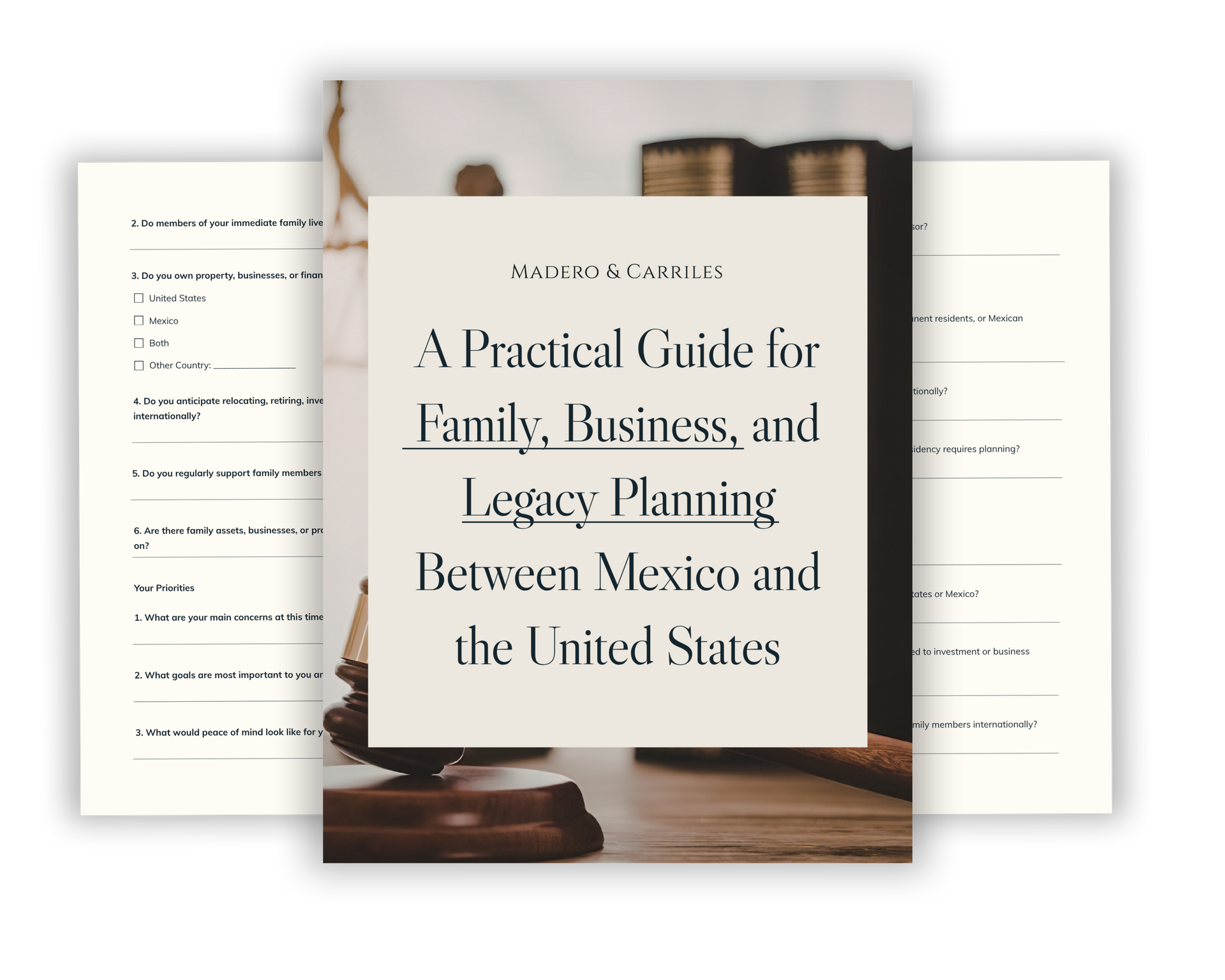
Book a free consultation for your legal matters
Let’s build a legal strategy that supports what matters today and for generations to come.





FAQ
How much does estate planning cost?
Estate planning costs vary depending on the complexity of the client’s assets, family structure, and whether trust-based planning is required. A carefully designed estate plan often represents an investment in preventing probate delays, reducing administrative complications, and minimizing future disputes.
When should I hire an estate planning attorney?
Estate planning should be considered once an individual owns property, has dependents, or wishes to establish clear instructions for how assets should be transferred. Early planning provides greater flexibility and allows individuals to make thoughtful decisions before urgency arises.
What documents are included in an estate plan?
A comprehensive California estate plan often includes several coordinated documents. These may include a will, a revocable living trust, a durable power of attorney for financial matters, an advance healthcare directive, and related transfer or beneficiary designation documents designed to align assets with the estate plan.
What happens if I die without a will?
If a person dies without a will in California, the estate is distributed according to the state’s intestate succession laws. These statutory rules determine which relatives inherit assets, regardless of the individual’s personal wishes.
This process generally requires probate court involvement and may result in outcomes that do not reflect the person’s intended distribution of property. Thoughtful estate planning allows individuals to maintain control over how their assets are transferred.
Is estate planning only for wealthy families?
Estate planning is beneficial for individuals and families at many different financial levels. Anyone who owns property, has dependents, or wishes to ensure clarity and efficiency in asset transfer can benefit from a structured estate plan.