Living trust attorneys | Estate planning Madero & Carriles
If you are searching for a living trust attorney, you are likely thinking ahead. You may want to avoid probate, protect your family from unnecessary court involvement, or create a structured plan that reflects your long-term intentions.
In case you are new here, we are Madero & Carriles a bilingual and bicultural law firm advising individuals and families in Los Angeles whose assets, property interests, and family relationships sometimes extend across the United States and Mexico. Many of the estate planning matters we handle involve designing structures that account for cross-border property, international family considerations, and long-term asset protection.
Creating a living trust is one of the most effective estate planning tools available under California law. However, when assets, heirs, or property exist across borders, thoughtful coordination becomes essential. On this page, we explain what a living trust is, how it works, and how strategic planning can help protect your legacy with clarity and precision.
What is a living trust?
A living trust is a legal document created during your lifetime that holds and manages your assets for your benefit while you are alive and distributes them according to your instructions after death.
Unlike a will, a properly funded living trust can allow assets to transfer without going through probate court in California. It may also provide continuity during incapacity, reduce court involvement after death, offer greater privacy than probate proceedings, streamline asset distribution, and support long-term family planning.
When assets exist in both the United States and Mexico, living trust planning should be aligned with foreign ownership laws and inheritance frameworks. Without coordination between U.S. and Mexican legal systems, unintended legal or tax consequences may arise.
Strategic trust planning helps create stability, continuity, and long-term protection across generations.
Most common challenges in living trust planning
One of the most common problems in living trust planning is improper funding. Many individuals create a trust but never properly transfer their assets into it, which can undermine its purpose and leave assets exposed to probate.
Cross-border property can also create additional complexity. Real estate located in Mexico may require separate legal coordination in order to align with a U.S. trust structure.
Another challenge involves misunderstanding which assets should actually be placed into a trust. Not every asset should automatically be transferred, and improper transfers can create tax or administrative complications.
Tax misconceptions also arise frequently. A living trust does not automatically eliminate taxes, and thoughtful structuring is still necessary to support long-term tax efficiency.
Some individuals also rely on online templates or simplified forms that do not account for family complexity, business ownership, or cross-border realities. What appears simple at first may create avoidable problems later.
How do I know if I need a living trust attorney?
You may benefit from working with a living trust attorney if you own real estate in California, because property held in your name alone may trigger probate if no trust planning is in place.
A living trust may also be appropriate if you want to reduce court involvement after death. When properly structured and funded, it can help minimize probate exposure and provide a more efficient transfer process for your family.
If you own business interests or assets across borders, integrated estate and corporate planning becomes particularly important. Living trust planning can also be valuable if you want clear incapacity planning, since a trust can provide continuity if you become unable to manage your assets.
Many individuals pursue trust planning because they want long-term clarity rather than reactive planning. In more complex estates, careful legal guidance is often essential to ensure that the trust operates as intended.
How we approach living trust planning in Los Angeles, California
We begin by reviewing your full asset picture, including domestic and international holdings. This includes evaluating ownership structure, family dynamics, tax exposure, and any business interests that may affect the planning process.
From there, we design a living trust strategy aligned with California estate law, cross-border coordination with Mexico where necessary, tax efficiency considerations, and long-term intergenerational planning.
Legal planning should feel clear and structured rather than overwhelming. Our goal is to ensure that you understand how your trust functions, how your assets should be titled, and what your heirs can expect in the future.
We do not view living trust planning as simply document creation. It is the process of building a stable legal framework that can protect your family for years to come.
What topics can we address within living trust attorney services?
Working with a living trust attorney involves more than drafting a document. A living trust must be carefully designed, properly funded, and aligned with your estate plan, tax considerations, and cross-border circumstances. As part of our living trust attorney services in Los Angeles, California, we address key factors that determine how the trust will function over time.
Customized trust formation and drafting
Every family and business structure is different.
We draft revocable living trusts tailored to your goals, assets, and long-term objectives. This may include individual or joint trusts, planning for blended families, business ownership considerations, and structured distributions.
Clear and precise drafting helps ensure the trust reflects your intentions and remains effective if later reviewed or challenged.
Strategic trust funding
A living trust only works if assets are properly transferred into it.
We guide the funding process by coordinating real estate transfers, account retitling, business interest assignments, and alignment of beneficiary designations.
Improper funding is one of the most common issues. Our role is to ensure the trust functions in practice, not just on paper.
Cross border asset coordination
If you own assets in Mexico, additional coordination is required.
We evaluate whether separate planning instruments are needed, how U.S. trusts interact with foreign legal systems, and whether reporting or procedural considerations apply.
Cross-border planning ensures alignment between jurisdictions and helps prevent unintended consequences.
Integration with incapacity planning
A living trust can provide continuity during incapacity when properly integrated with other documents.
We coordinate powers of attorney, healthcare directives, trustee succession, and emergency authority so that both personal and financial matters remain managed without disruption.
Tax exposure analysis and planning
Although revocable trusts do not eliminate estate taxes, they can support long-term tax efficiency.
We evaluate estate tax exposure, capital gains implications, community property considerations, cross-border tax factors, and asset valuation issues.
Early tax awareness helps reduce future financial impact.
Business interest structuring
For business owners, trust planning must align with corporate governance.
We review operating agreements, shareholder provisions, buy-sell structures, voting rights, and succession triggers to ensure business continuity is preserved.
Beneficiary protection strategies
Living trusts can include provisions to protect beneficiaries over time.
This may include staggered distributions, incentive-based structures, asset protection mechanisms, and special needs considerations.
Trust design should reflect both financial goals and family realities.
Asset classification and exclusion review
Not all assets should be placed into a trust.
We evaluate retirement accounts, insurance policies, and beneficiary-designated assets to determine appropriate structuring.
Proper classification helps avoid tax consequences and conflicts with existing designations.
Privacy and probate avoidance strategy
Living trusts can reduce probate exposure and increase privacy.
We evaluate which assets may avoid probate, whether risks remain, and how cross-border considerations may affect outcomes.
Proper structuring supports a more efficient and private transfer process.
Long term trust administration planning
We prepare clients and trustees for future responsibilities.
This includes fiduciary duties, recordkeeping expectations, distribution structures, and communication with beneficiaries.
Clear planning reduces uncertainty and potential disputes.
Periodic trust review and adaptation
Estate plans should evolve over time.
We assist with amendments, restructuring, and updates following life changes, business developments, or cross-border adjustments.
Trust planning should remain aligned with your current reality.
Tips & resources for living trust planning
Living trusts require proper funding and coordination to function effectively.
Key considerations include:
- Transfer assets into the trust correctly
- Align business interests with governance documents
- Evaluate cross-border ownership carefully
- Review and update plans regularly
A well-maintained trust provides clarity, continuity, and long-term stability for your family and assets.
Your trusted law firm in Los Angeles, California
Living trust attorney specialists
At Madero & Carriles, we guide cross-border individuals, families, and business owners through California living trust planning with clarity and long-term perspective.
Our lived cross-border experience allows us to anticipate how U.S. trust structures may interact with Mexican property ownership and inheritance rules.
We focus on building durable legal frameworks rather than one-time documents. When you work with our firm, you receive consistent access to experienced legal counsel who understands both estate planning and cross-border realities.

We provide bilingual cross-border estate planning & probate, immigration, and business law services across the U.S. and Mexico. We are in Los Angeles, California, as well as in Mexico City and Guadalajara.
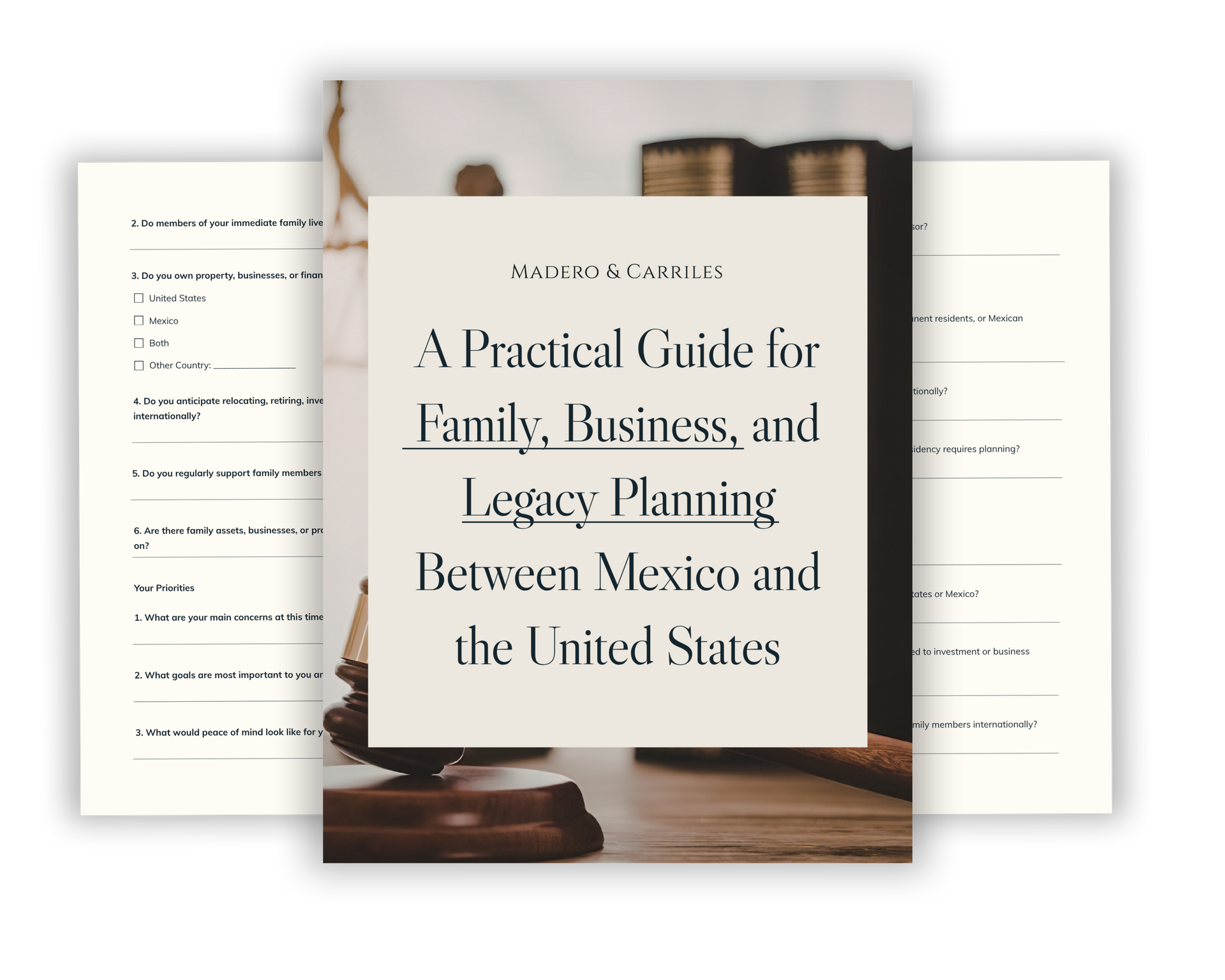
Book a free consultation for your legal matters
Let’s build a legal strategy that supports what matters today and for generations to come.







FAQ
How much does a living trust cost in California?
The cost of a living trust in California varies depending on the complexity of the estate, the nature of the assets involved, and whether cross-border coordination is required. More sophisticated estates generally require more customized drafting and strategic alignment.
Do I need a lawyer to create a living trust?
While templates exist, estates involving complex assets, business interests, or cross-border property often require legal guidance. Improper drafting or failure to fund the trust can significantly undermine its effectiveness.
What are disadvantages of a living trust?
Living trusts require proper funding, ongoing maintenance, and periodic review. They do not automatically eliminate taxes, and when assets exist abroad, additional coordination with foreign legal systems may be necessary.
Can a living trust avoid probate?
A properly funded living trust can allow assets held within the trust to pass outside probate in California. However, assets that are not transferred into the trust may still require court involvement.
What assets should not go into a trust?
Certain retirement accounts, health savings accounts, and assets with designated beneficiaries may not be appropriate for transfer into a trust. Careful legal review helps ensure that each asset is placed intentionally and in alignment with the broader estate plan.