Small estate affidavit attorneys | Probate Madero & Carriles
If you are searching for a small estate affidavit attorney in Los Angeles, you are likely trying to determine whether the estate qualifies for California’s simplified transfer procedure. A small estate affidavit is not automatically available in every situation. It requires careful evaluation of the type of assets involved, applicable valuation thresholds, mandatory waiting periods, and compliance with the California Probate Code. Proper execution is essential to ensure that financial institutions accept the affidavit and that assets are transferred without triggering formal probate proceedings.
In case you are new here, we are Madero & Carriles, a bilingual and bicultural law firm advising individuals and families in Los Angeles whose estate matters sometimes involve assets, beneficiaries, or legal interests located in both the United States and Mexico. Many of the probate and estate administration matters we handle require evaluating whether simplified procedures, such as small estate affidavits, are appropriate when estates include cross-border considerations.
Not every estate requires formal probate in California. In certain circumstances, a small estate affidavit may provide a more streamlined legal pathway. On this page, we explain when this process may apply, what limitations exist, and how cross-border factors may affect eligibility.
What is a small estate affidavit?
A small estate affidavit is a legal tool under California law that allows heirs to collect certain assets without opening a formal probate case.
Instead of filing a probate petition in court, eligible heirs may use a properly executed affidavit to transfer qualifying assets directly from financial institutions or other asset holders. However, eligibility is strictly defined under California law. The total value of certain assets must fall below a statutory threshold, and specific waiting periods must be satisfied before the affidavit can be used.
Although the process may appear simple, improper use can create legal complications or delays. Thoughtful legal guidance helps ensure compliance and supports long-term stability for the family.
Most common challenges with small estate affidavits
One of the most common challenges involves misunderstanding how estate assets should be valued. Many families are unsure which assets count toward the statutory threshold and which are excluded under California law.
Confusion also frequently arises when real estate is involved. Not all property qualifies under California’s simplified small estate procedures, and the presence of real estate often requires a more detailed legal analysis.
Cross-border ownership may add another layer of complexity. If the decedent owned property in Mexico, the California small estate affidavit process may not resolve the transfer of those foreign assets.
Families also encounter difficulties when documentation is incomplete or incorrectly prepared. Banks and other institutions typically require precise forms and supporting documents, and even small errors may result in rejection or delay.
In many cases, families feel pressure to move quickly after a loss. That sense of urgency is understandable, but overlooking procedural requirements can create setbacks that are avoidable with careful planning.
How do I know if a small estate affidavit applies?
A small estate affidavit may be appropriate if the total value of the estate falls below California’s statutory limit for qualifying probate assets. Determining that value requires more than a rough estimate. It requires a careful review of which assets are included under the law and which may be excluded.
Eligibility also depends on the nature of the assets involved. Certain simplified procedures are limited to personal property, while real estate may require separate analysis or a different legal process.
California law also imposes a mandatory waiting period after death before a small estate affidavit may be used. Filing too early can create procedural problems.
When assets exist outside California, particularly in Mexico, separate legal coordination may also be necessary. Early clarity helps prevent procedural mistakes and unnecessary delay.
How we approach small estate affidavits in Los Angeles, California
Our approach combines careful eligibility analysis, detailed asset valuation review, cross-border awareness, and clear communication with families throughout the process.
We begin by reviewing the full asset picture rather than focusing only on the accounts a family believes may qualify. This allows us to determine whether a small estate affidavit is legally appropriate or whether probate may ultimately be required.
When cross-border property or financial interests are involved, we also evaluate whether separate proceedings in Mexico may be necessary to complete the transfer process properly.
Legal guidance in this context should provide certainty rather than shortcuts that create future problems. Our goal is to help families move forward efficiently while remaining fully compliant with California law.
What topics can we address within small estate affidavit services?
A small estate affidavit may appear to be a simplified process, but proper legal evaluation remains essential. Using it incorrectly can lead to rejected filings, delays, or legal exposure for heirs. As part of our small estate affidavit services in Los Angeles, California, we evaluate the full legal picture so families understand both the benefits and limitations of this process.
Comprehensive eligibility analysis
We begin with a structured review to determine whether the estate qualifies under California’s small estate threshold.
This includes calculating the value of probate assets, identifying excluded assets, reviewing joint ownership, and evaluating beneficiary-designated accounts. Eligibility requires precise legal analysis, not assumptions.
Asset classification and valuation
Not all assets are treated equally under California law.
We distinguish between probate and non-probate assets, joint tenancy, community property, payable-on-death accounts, and retirement assets. Proper classification determines whether the affidavit can be used or probate is required.
Waiting period compliance and procedural timing
California requires a mandatory waiting period before a small estate affidavit can be used.
We ensure compliance with timing requirements, proper issuance of death certificates, accurate affidavit language, and correct identification of heirs. Procedural errors can invalidate the process and cause delays.
Financial institution coordination
Even valid affidavits may be rejected if documentation is incomplete.
We prepare compliant affidavits, respond to institutional requirements, provide supporting documentation, and coordinate communications with financial institutions. Proper preparation helps streamline asset transfer.
Real estate evaluation and limitations
Real property typically does not qualify under standard small estate affidavit procedures.
We evaluate whether simplified procedures apply, review title transfer requirements, assess potential tax implications, and determine if additional filings are needed. Real estate often requires separate legal analysis.
Cross border asset considerations
If assets are located in Mexico, the California affidavit process may not apply to those holdings.
We assess whether foreign proceedings are required, how U.S. and Mexican rules interact, and whether additional reporting obligations arise. Cross-border estates require coordinated legal strategy.
Risk mitigation for heirs
Improper use of a small estate affidavit can expose heirs to liability.
We evaluate creditor claims, competing heir interests, incomplete asset disclosure, and tax considerations. Our goal is to ensure heirs proceed safely and with legal clarity.
Transition to probate when required
Some estates initially appear to qualify but require probate after legal review.
We provide clear guidance, explain why probate is necessary, outline timelines and costs, and coordinate the transition efficiently to avoid delays.
Long term estate stabilization
Even when a small estate affidavit is appropriate, families often benefit from updated planning.
We assist with trust creation, beneficiary review, and cross-border structuring to reduce future complications and improve long-term clarity.
Tips & resources for navigating small estate affidavits
Small estate affidavits require accurate documentation and realistic expectations.
Key considerations include:
- Confirm asset values carefully
- Do not assume real estate qualifies
- Organize documentation early
- Seek guidance for cross-border assets
A structured approach helps ensure efficiency while reducing legal and administrative risks.
Your trusted law firm in Los Angeles, California
Small estate affidavit attorneys.
At Madero & Carriles, we guide cross-border families through California estate procedures with clarity and long-term perspective.
Our lived cross-border experience allows us to recognize when simplified procedures are appropriate and when additional coordination may be required.
We focus on providing structured legal guidance that helps protect families from unintended consequences while supporting efficient asset transfer where the law allows.

We provide bilingual cross-border estate planning & probate, immigration, and business law services across the U.S. and Mexico. We are in Los Angeles, California, as well as in Mexico City and Guadalajara.
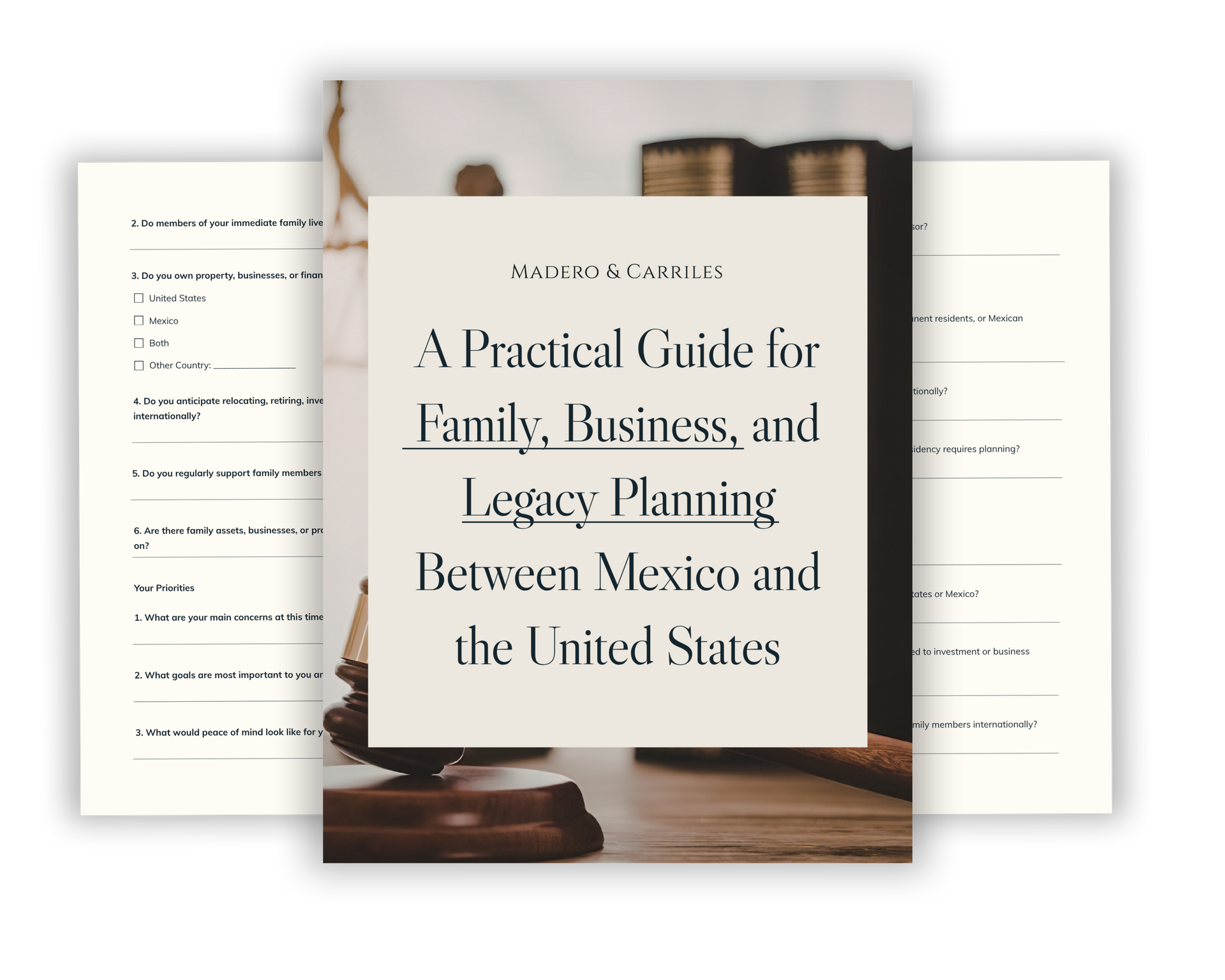
Book a free consultation for your legal matters
Let’s build a legal strategy that supports what matters today and for generations to come.



FAQ
What qualifies as a small estate in California?
A small estate generally qualifies when the total value of certain probate assets falls below California’s statutory threshold. That calculation may exclude some jointly held assets or assets that transfer through beneficiary designations. Proper valuation and classification are essential before relying on the procedure.
What is the dollar limit for a small estate affidavit?
California law sets a specific monetary cap that determines eligibility for a small estate affidavit. Because that limit may be adjusted over time, it is important to confirm the current statutory amount before proceeding.
How long must you wait before filing?
California requires a minimum waiting period after the decedent’s death before a small estate affidavit may be used. Attempting to proceed before that period has passed may invalidate the process and create unnecessary delays.
Does real estate qualify?
In most situations, real estate does not qualify under the general small estate affidavit procedure, although limited exceptions or separate simplified procedures may apply. Real property often requires additional legal analysis before transfer.
Is probate required for small estates?
If the estate falls within the statutory limit and all procedural requirements are satisfied, formal probate may not be required. However, estates that exceed the threshold or include more complex assets may still require court involvement.