Corporate Governance Lawyers | Compliance | Los Angeles
If you are searching for corporate governance lawyers in Los Angeles, you are likely evaluating how your company’s leadership structure, internal policies, and compliance systems should operate as the business grows.
As companies expand, their legal responsibilities often grow with them. Business owners naturally focus on operations, strategy, and growth, yet the internal systems that guide decision making and regulatory compliance are equally important to the long-term stability of the organization.
Corporate governance and compliance frameworks help companies operate with transparency, accountability, and legal clarity. Without these structures, businesses may face internal conflict, regulatory exposure, or operational uncertainty that can undermine growth and investor confidence.
In case you are new here, we are Madero & Carriles, a bilingual and bicultural law firm advising entrepreneurs, executives, and business owners in Los Angeles whose companies and investments often extend across the United States and Mexico. Many of the corporate matters we handle involve organizations navigating leadership structures, internal governance, and regulatory compliance while operating in cross-border environments. This perspective allows us to guide companies through governance and compliance decisions with a practical understanding of both business operations and legal responsibilities.
Corporate governance is not simply about formalities. It is about creating leadership structures and internal systems that allow companies to operate responsibly while maintaining legal alignment. On this page, we explain how corporate governance and compliance function under California law, common challenges businesses encounter as they grow, and how coordinated legal planning can support organizations operating across borders.
What is corporate governance & compliance?
Corporate governance refers to the internal framework that defines how a company is directed and managed. It includes the rules, policies, and procedures that guide decision making within the organization and establish the roles and responsibilities of directors, officers, managers, and shareholders.
Corporate compliance focuses on ensuring that a company’s operations follow applicable laws, regulatory obligations, and internal policies designed to maintain ethical and lawful conduct. Compliance systems help organizations identify potential risks, implement internal controls, and maintain alignment with legal requirements.
Together, governance and compliance structures create the foundation for responsible corporate management. They provide clarity regarding authority, accountability, and oversight while helping protect the interests of stakeholders, investors, and employees.
When companies operate across borders, governance frameworks may also require coordination between legal systems. Corporate rules in California do not always align with corporate governance structures in Mexico. Businesses that operate in both jurisdictions often benefit from coordinated legal planning that allows governance systems to function effectively within each country’s corporate framework.
Common governance and compliance challenges businesses face
Many companies begin operations with informal leadership structures, which can function effectively in early stages but may become difficult to manage as the organization grows. Without clearly defined decision making authority, businesses may experience internal conflicts or operational uncertainty.
Another common challenge arises when companies lack well defined internal policies. Without written procedures that guide employee conduct, regulatory compliance, and operational practices, organizations may struggle to maintain consistent standards across teams and departments.
Rapid growth can also expose governance weaknesses. As companies expand, bring in new executives, or attract investors, governance frameworks often need to evolve to support more complex leadership structures and oversight mechanisms.
Businesses that operate in regulated industries or across jurisdictions may face additional compliance challenges. In these situations, governance systems must not only support internal management but also ensure that the company remains aligned with applicable legal and regulatory requirements.
How do I know if I need a corporate governance attorney?
Companies often seek corporate governance guidance when their organizational structure becomes more complex. As leadership teams expand and responsibilities become more specialized, businesses benefit from governance frameworks that clearly define decision making authority and oversight responsibilities.
Legal guidance may also become important when a company must comply with regulatory obligations or industry specific requirements. In those situations, internal policies and compliance systems help organizations maintain consistent practices while reducing exposure to regulatory issues.
Businesses that involve multiple directors, executives, shareholders, or investors frequently require governance systems that clarify roles, voting rights, and fiduciary responsibilities. Clearly structured governance frameworks help prevent misunderstandings and support accountability among leadership teams.
Corporate governance planning may also be particularly valuable for companies whose operations or ownership structures involve more than one jurisdiction. Businesses operating in both the United States and Mexico often benefit from coordinated governance planning that allows leadership structures and compliance systems to function effectively within each country’s legal framework.
How we approach corporate governance & compliance in Los Angeles, California
Our approach to corporate governance begins with understanding how the company currently operates, including its leadership structure, internal policies, and regulatory environment. Governance systems must reflect the operational realities of the organization while providing clear frameworks for accountability and oversight.
We work with companies to evaluate whether their governance structures clearly define authority among directors, executives, and managers, and whether internal decision making processes support responsible leadership and organizational transparency. Where necessary, we assist in developing governance frameworks that clarify responsibilities, reporting structures, and oversight mechanisms.
Compliance planning is also an important part of this process. Businesses often benefit from internal policies that guide employee conduct, operational procedures, and regulatory compliance. Thoughtful policy development can help organizations maintain consistent practices while reducing legal risk.
For companies whose operations extend beyond the United States, governance planning may also require cross border coordination. Our firm frequently advises clients whose businesses operate in both the United States and Mexico. In those situations, we can assist in aligning corporate governance systems with both California corporate requirements and Mexican corporate structures when appropriate.
Our goal is not simply to create policies or documents. It is to help organizations build governance systems that support operational clarity, leadership accountability, and long term stability.
What topics can we address within corporate governance & compliance?
Corporate governance involves much more than drafting internal policies. It is the framework that determines how authority is exercised within an organization, how oversight is maintained, and how the company ensures compliance with applicable legal obligations.
As corporate governance lawyers in Los Angeles, California, we assist companies in developing governance systems that support responsible leadership, regulatory alignment, and operational stability.
Because many of the businesses we advise operate internationally, governance planning may also include evaluating how leadership structures and compliance systems interact with foreign corporate frameworks. Coordinating governance structures between the United States and Mexico can help companies operate across borders while maintaining legal clarity and organizational accountability.
Tips & resources for corporate governance
Corporate governance systems often evolve as a company grows. Businesses that establish clear leadership roles and decision making authority early are typically better positioned to maintain operational clarity as their organizations expand.
Maintaining written internal policies can also help organizations operate consistently across teams and departments. Well designed policies provide guidance for employees while reinforcing compliance with applicable legal and regulatory standards.
Companies benefit from periodically reviewing their governance and compliance practices as the organization develops. Growth, investment, and expansion into new markets often require adjustments to leadership structures and internal oversight systems.
Businesses operating internationally should also consider how governance systems interact with corporate frameworks in other jurisdictions. Coordinated governance planning can help organizations maintain alignment when operations extend across borders.
Your trusted law firm in Los Angeles, California
Legal guidance for companies building strong governance systems.
At Madero & Carriles, we advise companies that want to operate with structured governance systems and responsible compliance practices.
Many organizations reach a stage where informal leadership processes are no longer sufficient. As companies grow, governance frameworks and compliance systems become essential for maintaining operational clarity and legal alignment.
Our cross border experience allows us to advise organizations whose leadership structures and operations extend across jurisdictions. For businesses operating in both the United States and Mexico, governance systems may require careful coordination to ensure that leadership responsibilities, corporate formalities, and compliance practices remain consistent with the legal requirements of each country.
Our role is to help companies establish governance structures that support leadership accountability, regulatory alignment, and sustainable organizational growth.
We provide bilingual cross-border estate planning & probate, immigration, and business law services across the U.S. and Mexico. We are in Los Angeles, California, as well as in Mexico City and Guadalajara.
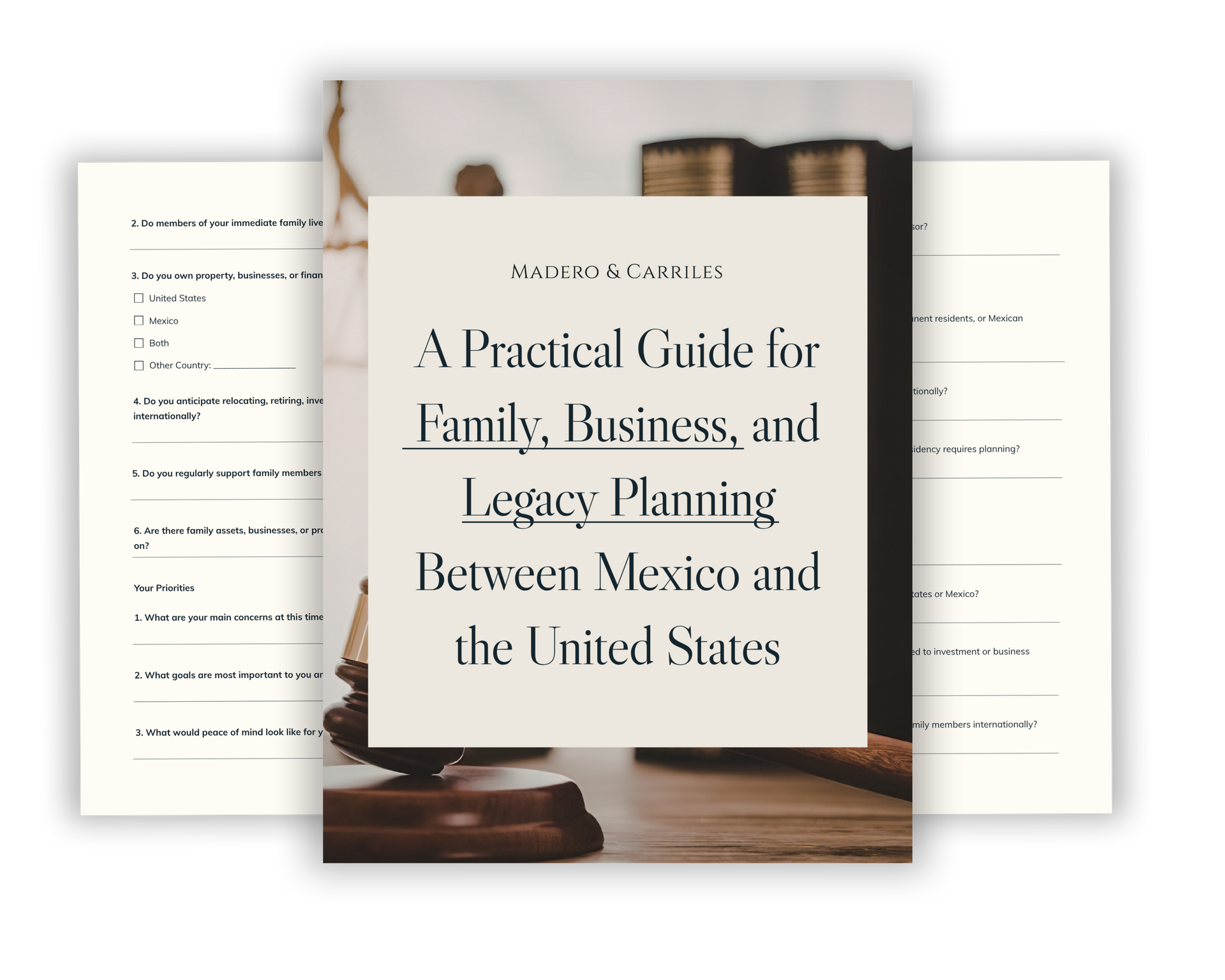
Book a free consultation for your legal matters
Let’s build a legal strategy that supports what matters today and for generations to come.

FAQ
Why is corporate governance important for companies?
Corporate governance provides the framework that defines how decisions are made within an organization and how responsibilities are distributed among leadership roles. Well structured governance systems support transparency, accountability, and long term organizational stability.
What are the legal duties of company officers?
Company officers typically have fiduciary duties that require them to act in the best interests of the company, exercise reasonable care in decision making, and avoid conflicts of interest. These responsibilities help ensure that leadership decisions align with the interests of the organization and its stakeholders.
What policies must companies have to remain compliant?
The policies required vary depending on the industry and regulatory environment. Many organizations maintain internal policies addressing operational procedures, ethical conduct, financial oversight, and regulatory compliance in order to support consistent and responsible business practices.
What are common corporate governance failures?
Governance challenges often arise when leadership roles are unclear, oversight systems are weak, or internal policies are insufficient. Companies may also encounter governance difficulties when rapid growth occurs without corresponding adjustments to leadership structures and compliance systems.
What are the key differences between governance and compliance and how do they work together (GRC)?
Governance and compliance serve different but complementary roles within a business. Governance establishes the structure, decision-making processes, and oversight that guide how a company operates, while compliance focuses on meeting specific legal and regulatory requirements to ensure the business remains within the law.
Together, governance, risk, and compliance (GRC) create a unified system where governance sets the direction, compliance ensures adherence, and risk management identifies and mitigates potential issues. For companies in Los Angeles, especially those operating across borders, aligning these elements helps reduce legal exposure while supporting long-term stability and growth.